
Maieutic coaching: the Socratic method as midwifery.
Drawing out what is already there, and telling the true birth from the false one.
The method underneath the transformational coaching and consulting practice of Joshua Beneventi, San Diego. Transformational in the Socratic sense: the change is in the person, and the person does it.
Coach is a carriage. Maieutic is a midwife.

Theaetetus, 148e to 151d.
Four neighbours, and where the line is.
Socratic questioning in CBT
A clinical technique for testing the evidence behind a belief, inside a treatment plan. Therapy, done by clinicians. This work has no diagnosis and no treatment; it works with a person who is well and at a threshold.
The Socratic Coaching Academy
A trademarked cognitive method in the thought-work lineage, taught as a certification. It examines beliefs with questions. Maieutic coaching starts from the Theaetetus, opens through the body, and welcomes what neither person brought.
Business or performance coaching
Optimises against goals you have already set. Maieutic work goes underneath the goals, to whether they are yours in the first place, and what structure would let the real thing emerge.
Midwifery for the next chapter.
A defined arc with a beginning, middle and end. I am engaged for a passage. When the passage completes, the work goes home with you. The midwife does not move in.
Four moves. Same sequence every time.
1 · Surface
Maieutic questioning. Bring the actual current state into the light, the version often hidden even from you. Not the story about your life. The structure of it.
2 · Get meta
Rise above the material to see its underlying pattern. The repeating shape. The script that keeps generating the same outcomes from different inputs.
3 · Articulate
Name the pattern in language that fits it. Naming is half the work; the pattern stops being weather and becomes something you can build with. This is where the midwife tests.
4 · Rebuild
Reconstruct the chapter from that clarity. Not patch the old structure. Rebuild from the well underneath it, so what comes next flows from what is actually yours.
What a maieutic session looks like.
Same method. Two subjects.
Coaching
The Chrysalis: ninety days of one-to-one maieutic coaching for a leader at a threshold. In person in San Diego or on Zoom.
The coaching page →Consulting
A defined arc, scoped to a founder-led firm: the same elicitation, applied to the language the organization runs on.
The consulting page →The Locator
Six questions that place you, or your organization, on a five-stage lifecycle and say what the work does at that stage.
An instrument →The self as an instrument. The work as tuning.
The one thing Socrates claimed to know.
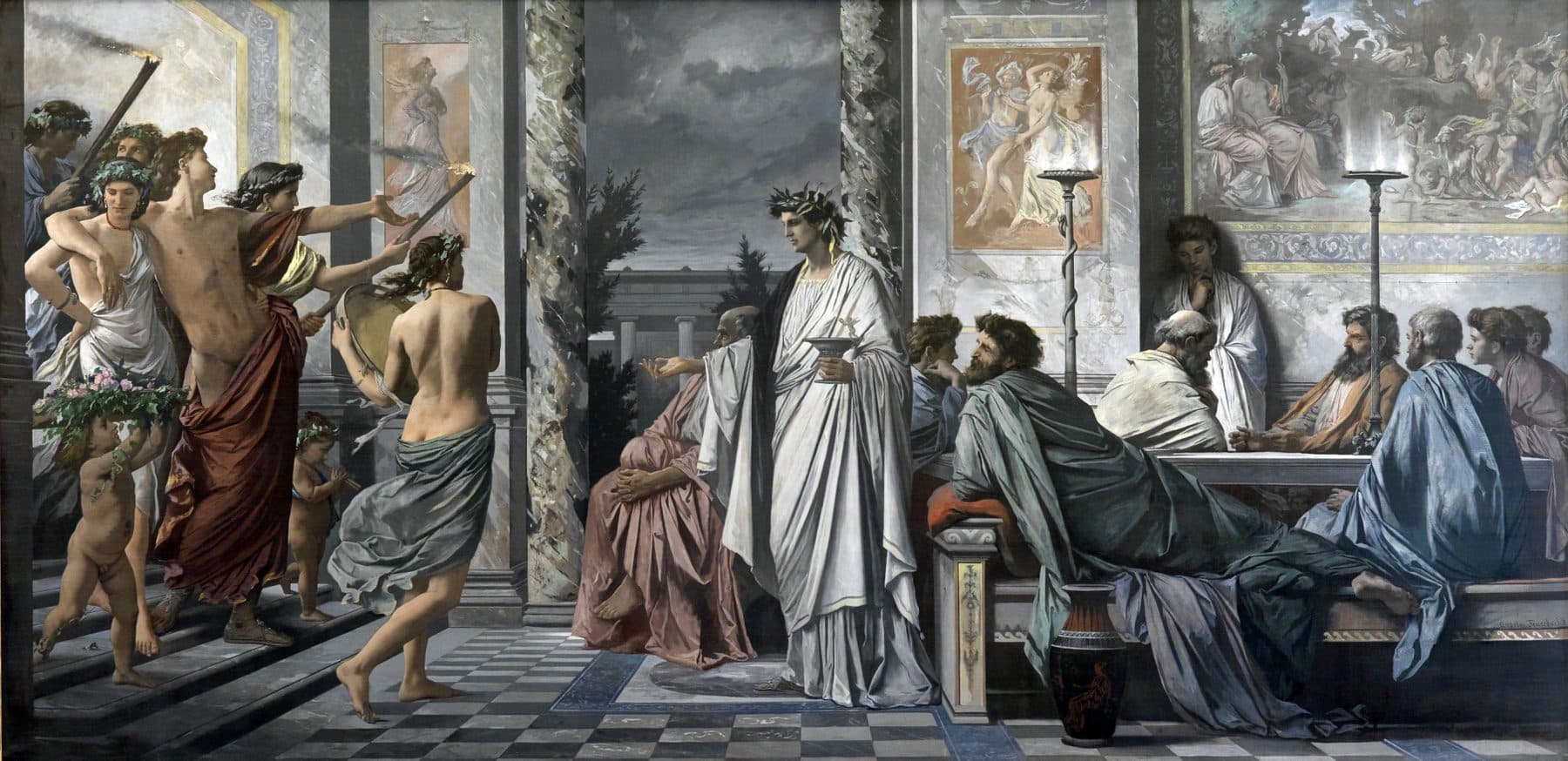
You are not a noun that got misfiled.

Seven notes, with sources.
- 01Why the chemistry call comes first. Across 1,895 coach–client pairs in 34 countries, how well coaching worked tracked the strength of the working relationship, not the personalities involved or how well they “matched.” A later meta-analysis of 27 studies put the relationship at a moderate, consistent correlation with every good outcome. Fit is most of it, which is why I ask you to compare.de Haan, Grant, Burger & Eriksson, Consulting Psychology Journal, 2016 · Graßmann, Schölmerich & Schermuly, Human Relations, 2020
- 02Does coaching work at all. A meta-analysis of coaching in organisations found significant positive effects on performance, well-being, coping, work attitudes and goal-directed self-regulation, the last being the largest.Theeboom, Beersma & van Vianen, Journal of Positive Psychology, 2014
- 03Why a session opens with breath or recitation. Five minutes of structured breathing a day improved mood and lowered physiological arousal more than an equal period of mindfulness meditation, in a randomised trial. And the older forms do the same work: reciting the rosary or a yoga mantra slows breathing to about six breaths a minute and strengthens the heart’s regulating rhythms, which is why traditions arrived at them long before the physiology was understood.Balban et al., Cell Reports Medicine, 2023 · Bernardi et al., BMJ, 2001
- 04Why we sometimes move. Walking raised creative output for four in five participants, with the effect lasting into the seated period afterward.Oppezzo & Schwartz, Journal of Experimental Psychology, 2014
- 05Why the practice should be yours, not mine. Ritual regulates emotion, sharpens performance states and binds people, and it does so through the meaning the person already carries. That is the argument for drawing on a tradition you hold rather than one I import.Hobson, Schroeder, Risen, Xygalatas & Inzlicht, Personality and Social Psychology Review, 2018
- 06Why naming things is half the work, and why you keep a record. Putting a feeling into words dampens the amygdala’s response to it and engages the prefrontal regions that regulate it. Writing about what matters, over several sessions, has measurable effects on health that hold up across dozens of studies. The Synthesis is built on both.Lieberman et al., Psychological Science, 2007 · Pennebaker, Psychological Science, 1997
- 07Where the method comes from. Socrates called his art midwifery: he brought forth nothing of his own, delivered what others were carrying, and tested whether the offspring was real. The defined arc with a beginning, a middle and an end is the shape every culture has given to a threshold, from van Gennep’s rites of passage to Turner’s liminality.Plato, Theaetetus 149–151 · Arnold van Gennep, Les rites de passage, 1909 · Victor Turner, The Ritual Process, 1969
Three traditions, one stance.
Maieutics, plainly.
- What does maieutic mean?
- Maieutic comes from the Greek maieutikos, relating to midwifery, from maia, midwife. In English since the 1650s it has named the Socratic method of helping a person discover, by questioning, what is already latent in their own mind. Pronounced may-YOO-tik.
- What is the maieutic method of Socrates?
- In Plato's Theaetetus (148e to 151d) Socrates says his art is like his mother Phaenarete's midwifery, except that it attends to souls in labour rather than bodies. He claims to be barren of wisdom himself, to bring forth nothing of his own, and to have one particular skill: telling whether what has been delivered is a true birth or a wind-egg. That is the method: questioning that draws out what the other person already carries, and then testing it.
- What is maieutic coaching?
- Coaching practised on the midwife's model rather than the carriage's. The coach adds no content, holds the structure of the conversation, asks the question that opens the door, records what surfaces so it stays found, and tests what comes out for whether it is real. Every body that certifies coaches agrees on the substance of this: the client is the source, the coach owns the process and not the content, and the measure is the client's own goals.
- How is this different from the Socratic Coaching Academy?
- The Socratic Coaching Academy is Kara Loewentheil's trademark for a cognitive method, in the thought-work lineage, taught as a certification to coaches. It uses Socratic questioning to examine beliefs. Maieutic coaching as practised here is older and broader: it starts from the Theaetetus rather than from cognitive psychology, opens through the body rather than the thought, welcomes what neither person brought, and runs as a defined ninety-day arc with a written record. Both are honest uses of the word Socratic. They are not the same practice.
- How is this different from Socratic dialogue in CBT?
- Cognitive behavioural therapy uses Socratic questioning as a clinical technique to test the evidence for a belief, inside a treatment plan for a diagnosed condition. It is therapy, done by licensed clinicians. Maieutic coaching is not therapy and has no diagnosis. It works with a person who is well and at a threshold, and its aim is a next chapter rather than symptom relief.
- Is the Socratic method effective in coaching?
- The parts that can be measured have been. Across 1,895 coach and client pairs in 34 countries, how well coaching worked tracked the strength of the working relationship rather than the personalities involved, and a meta-analysis of 27 studies put the relationship at a moderate, consistent correlation with every good outcome. Putting a feeling into words dampens the amygdala's response and engages the prefrontal regions that regulate it, which is why naming is half the work. The sources are listed on the coaching page.
- What questions does a maieutic coach ask?
- Fewer than you would think, and the same few, repeated: What is actually here? What is the pattern underneath it? What is the true name for it? What would you build from that, if you built from the well underneath rather than patching the old structure? The forty questions I actually use are being written up as a Library page.
- What is the science of desire?
- The phrase is Socrates' own claim: in Plato's Symposium he says he understands nothing except ta erotika, the matters of desire, and that he learned them from Diotima. In coaching it names the practical work of telling authentic desire from implanted desire: what you actually want, as against what was put in you by family, profession or fear. The Buddhist distinction between chanda, wholesome wanting, and tanha, craving, is the clearest tool for it. The essay is on this page.
- What does 'I seem to be a verb' mean for coaching?
- The line is Buckminster Fuller's, from his 1970 book of that title. A noun can be described, filed and lost; a verb is happening. Coaching on this view is not repairing a damaged object but resuming an action the person had stopped. It sits beside Plato's idea of learning as anamnesis, remembering what was already there, and Kurt Hahn's motto plus est en vous, there is more in you than you think. The essay is on this page.
- What is the difference between chanda and tanha?
- Both are Pali words for wanting. Tanha is craving, the thirst the Buddha named as the origin of suffering in his first sermon. Chanda is the desire to act, which the same teaching lists as the first of the four bases of accomplishment: the path itself needs it. The difference is in how the wanting behaves. Chanda grows clearer and calmer when you look at it and points somewhere; tanha shrinks or turns frantic under attention and circles back to itself.
“I am a midwife. My care is for souls in labour, and the proof of the work is whether what they bring forth was already theirs to bring.”After Plato · Theaetetus, 150b–c
If you want to see the method from the inside, the first step is thirty minutes, at no charge, to find out whether we are the right pair.
Book a chemistry call →