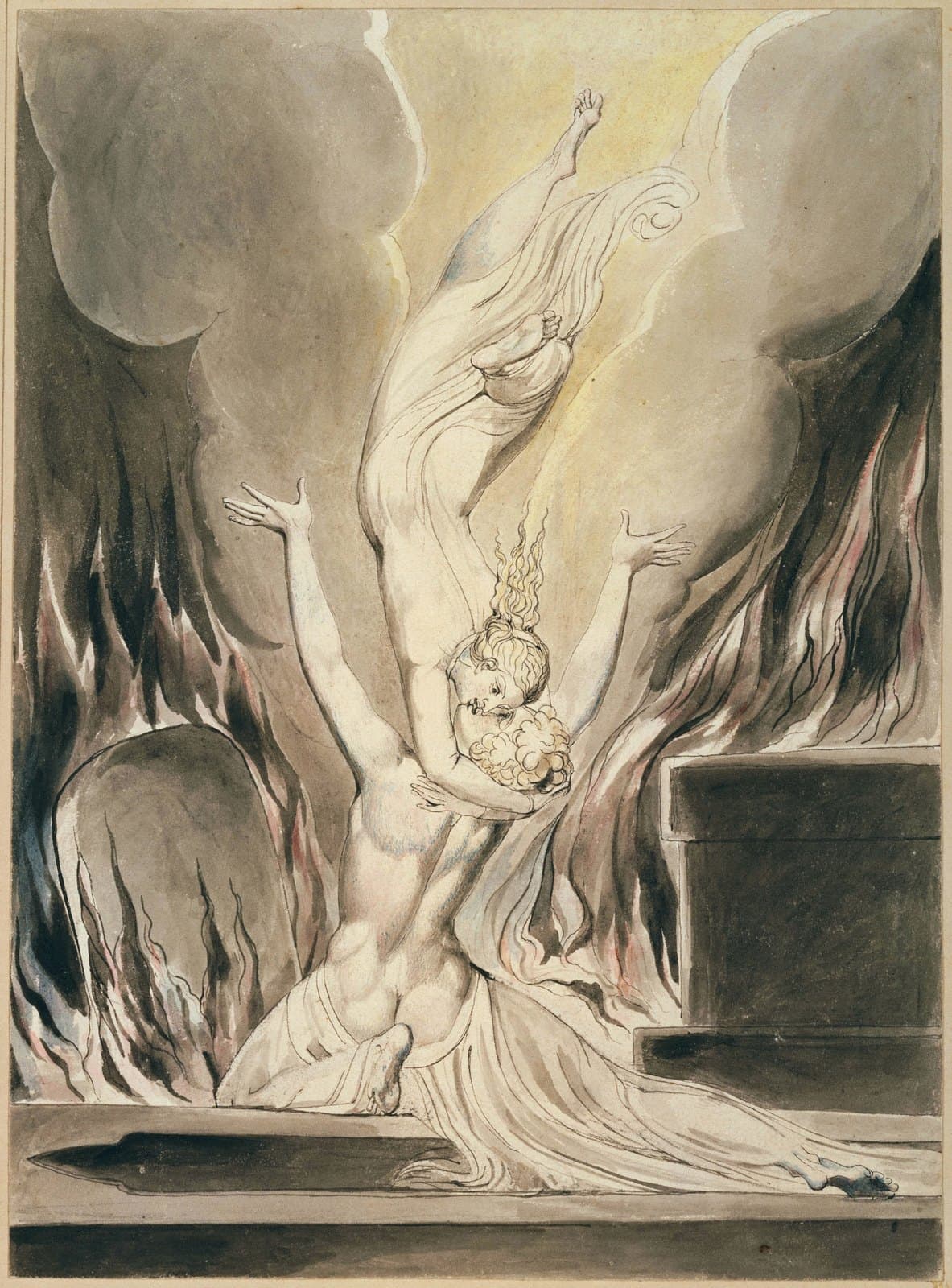
Transformational coaching.
For people at a threshold.
A defined arc of long conversations, a written record of what surfaces, and a clear end. Clarity about what you actually want, and the language the next chapter can be lived from. The one requirement is that you want it.

Three entry points. One of them is yours.
Transformational coaching
For the person whose chapter changed, by choice or not: a new role, an ending, a layoff, a diagnosis, a house gone quiet. And for the person who is successful by every outside measure and not at home in it.
One threshold, start to finish, at the root rather than the symptom. A written intake, a record of what surfaces built as we go, voice-note access between sessions, and a written Synthesis you keep. Some people extend it, or come back for a defined check-in later; that is arranged by conversation, not by subscription.
$2,400 · $1,200 · $600Decision and conflict coaching
For one decision with a date on it: take the role or not, stay or leave, end it or repair it. Or one conflict between two people, who can come together.
Lay it out and name who else is in it. Work the live options and what each would cost. Say the decision aloud, and the first step.
$800 · $400 · $200Strengths, vocation and purpose coaching
For the next right role, read against what you are actually good at. Students, people at a fork, anyone who has never had their strengths named.
You take the CliftonStrengths assessment; we read it against your history and your present role. You leave with a one-page vocation map in your own words. Gallup-trained.
$500 · $300 · $150Not for someone in crisis, which needs a clinician, and not for someone who wants the symptom handled and the root left alone.
Don’t know which one is yours? Book the free call and we’ll work it out together, or write to me directly at joshuabeneventi@gmail.com.
Three rates. You choose yours.
| Format | Shape | Professional | Community | Reduced (student) |
|---|---|---|---|---|
| Chemistry call | 30 minutes | No charge | ||
| The Ninety-Day Arc | 12 weekly sessions, intake, record, synthesis | $2,400 | $1,200 | $600 |
| The Decision | 4 sessions over 4–6 weeks | $800 | $400 | $200 |
| Strengths and Vocation | 3 sessions + CliftonStrengths (about $60, bought by you) | $500 | $300 | $150 |
You choose your rate. Professional is the full rate. Community is for people paying out of their own pocket. Reduced is the student rate, and it also covers nonprofit and public-service staff and anyone for whom community is a real barrier. No proof asked. If even the reduced rate is out of reach and the fit is right, write anyway; we will make something work.
Priced as the engagement, not the hour. Paid before the first session, or monthly for the Arc. Sponsored by an employer: the professional rate doubles, and the sponsor sees dates and attendance only. USD students and staff: reduced rate.
A chemistry call. Thirty minutes, no charge.
A real conversation, not a pitch. You’ll know quickly whether this is the right work and whether we are the right pair. If it isn’t, I’ll say so, and I’ll mean it: have the same call with another coach before you choose.


Six materials. Your own words for each.
Desire
Telling what you actually want from what was put in you. Socrates claimed to understand one thing only, desire, and learned it from Diotima; the Buddhists split the word into chanda, the wanting that builds, and taṇhā, the craving that binds.
Meaning
What this chapter is for. In the spirit of Viktor Frankl: a person can bear almost any how once they have a why, and the why is found, not invented.
Story, belief, identity
Who you are, against what you were told about yourself and the world. The inherited scripts get named, in your words, so they stop running you.
Values and conviction
What you would stand on if it cost you something. Held up against other ways of knowing, so the values that remain are the ones you chose.
The body and the practice
Sessions open in a practice you choose: breath, a text, a walk, silence. The porous self rather than the sealed one, so the questions land somewhere real.
The third
It isn’t me. It’s what arrives when two people leave room for it: the daimon, the muse, grace, the field, the option nobody brought. I treat that arrival as the point of the work.
And the ordinary things, which I take seriously: clarity, accountability, service, strengths. Go deeper: the science of desire · why the old words.
You have to want this.
“I live on Earth at present, and I don’t know what I am. I know that I am not a category. I am not a thing, a noun. I seem to be a verb, an evolutionary process, an integral function of the universe.”
R. Buckminster Fuller, I Seem to Be a Verb, 1970
Go deeper: the verb, the porous self, and remembering · the self as instrument
Six working agreements
Alongside the paperwork, these are how I work. You agree to them before we start, and so do I.
- We start from “it’s possible.” I won’t spend the hours arguing with “I can’t.”
- What we start, we finish. The arc has an end, and we get there.
- Curiosity before judgment, including about yourself.
- The between-session work is the work.
- If it isn’t working, you say so. So do I.
- The goal is that you won’t need me.
The Ninety-Day Arc: twelve sessions, one threshold.

Intake
Written prompts you answer in your own time, drawn into a working map before day one.
Opening
Day one starts at depth, from the map, in the territory you already know matters.
Arc
Weekly sessions, access between them, and a record of the language you find.
Completion
A written Synthesis: what moved, what remains in motion, what you build from.
The intake and the record are AI-assisted so the human hours go to what only a human hour can do; the encounter is not. Go deeper: why ninety days · what a session looks like

The Synthesis: a written reflection at the close of the arc.
Read an anonymized excerpt from a Synthesis
“The pattern that surfaced most clearly across our ninety days is the one you’d already half-named in our second session: the conflation of responsibility with identity. Every role you’ve stepped into, you’ve absorbed into yourself, not just done but become. That worked when the roles were yours to choose. It breaks when the role outgrows you, or when you need to put one down.”
“The architecture you’re rebuilding from isn’t a new identity. It’s a self that can hold a role lightly, one that does the work without becoming the work. We named this in week six and it kept resurfacing: in the conversation with your co-founder, in the decision about the board seat, in the way you talked about your father in our last session before the break. The same shape, three subjects.”
The threads that moved · the responsibility-as-identity fusion · the apprenticeship inheritance · the question of who you’ve been protecting and from what · the shift from owning the outcome to stewarding the conditions.
What remains in motion · the conversation with your mother that hasn’t happened yet · the question of whether the next chapter is built or chosen · the practice you named (the morning return) that we’ll see whether it holds in your hands after the arc closes.
Something arrives that neither of us brought.
Go deeper: how a session opens · the science of desire

Four moves. Same sequence every time.
1 · Surface
Bring what is actually there into the light. Not the story about your life; the structure of it.
2 · Get meta
See the repeating shape underneath the material.
3 · Articulate
Name the pattern in language that fits it. Naming is half the work.
4 · Rebuild
Build the next chapter from that clarity, not by patching the old one.
Go deeper: the maieutic method, in full
The self as an instrument. The work as tuning.
A life that feels like doldrums, or chaos, or plain ordinariness is not a broken instrument. It is a string that has not yet been divided well.
Go deeper: the monochord, from Plato to al-Fārābī

An ecology of practices, chosen with you.
Go deeper: what a session looks like · start alone with the free Self-Coaching Stack
Grateful for the people who’ve trusted me with this work.
“I am a Certified Professional Co-Active Coach and have worked with numerous experienced coaches over the past decade. Joshua would ask great questions with gentle curiosity and make insightful observations, but there was always something beyond what was being said: a quality of presence and aliveness that is beyond words. Within about seven sessions, things really shifted. As someone who has worked with many certified coaches, I can confidently say that Joshua already operates at the level of masterful coaching. I recommend him without reservation.”
 Bilal K.
“When I stepped into a senior-leadership role—one that demanded both deep technical judgment and people-first stewardship—I knew I had some growing to do. Joshua became the catalyst for that growth. He never forced a breakthrough; he guided me toward it. He meets you where you are, walks beside you through discomfort, and leaves you equipped to thrive long after the engagement ends.”
 Noor A.F.
“I recently participated in Joshua’s 90-day coaching program. What a transformative experience! I love how intuitively he approaches his work—it never felt like we were sticking rigidly to a template. He was able to draw from a wide range of tools and modalities to custom-fit a program just for me. With his guidance, I was able to do some very valuable inner healing and connect with my higher self, which has long been a missing link in my personal and spiritual development.”
 Jude C.
“Working with Joshua has been one of the most grounding and transformative experiences of my life. He is a flexible and considerate coach who blends professionalism with genuine care, and he has a remarkable talent for reframing perspectives in ways that create real, lasting change. He approaches each conversation with cultural respect, deep listening, and a calm presence that makes it easy to open up, always honoring who you are and where you come from.”
 Sham H.
“Working with Joshua feels like school, but for your soul. Joshua just knows how to bring light into you.”
 Jesse H.
“Between his incredibly authentic presence, phenomenal listening skills, skillful questions, and creative suggestions, he creates an environment where you can’t help but open up and think deeply. Unlike unfortunate imitators, Josh sets himself apart as ‘the real deal.’”
 Seyar K.
Measured where it can be.
All seven notes, with sources: the evidence, on the method page
I take on a small number of people at a time.